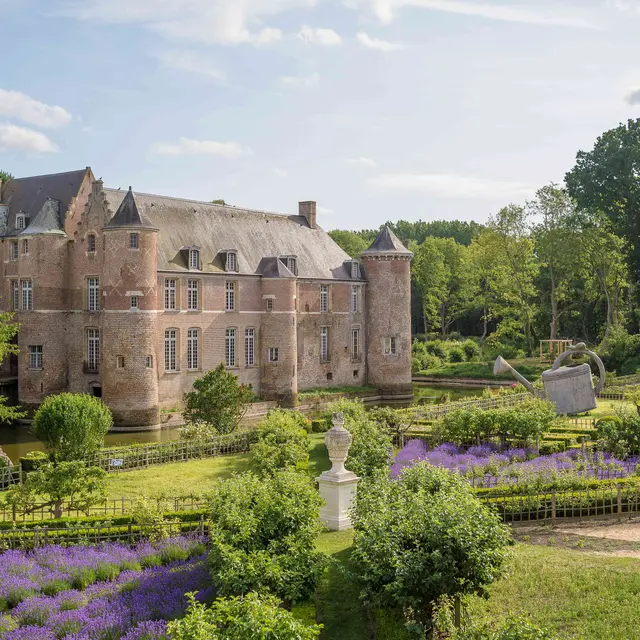
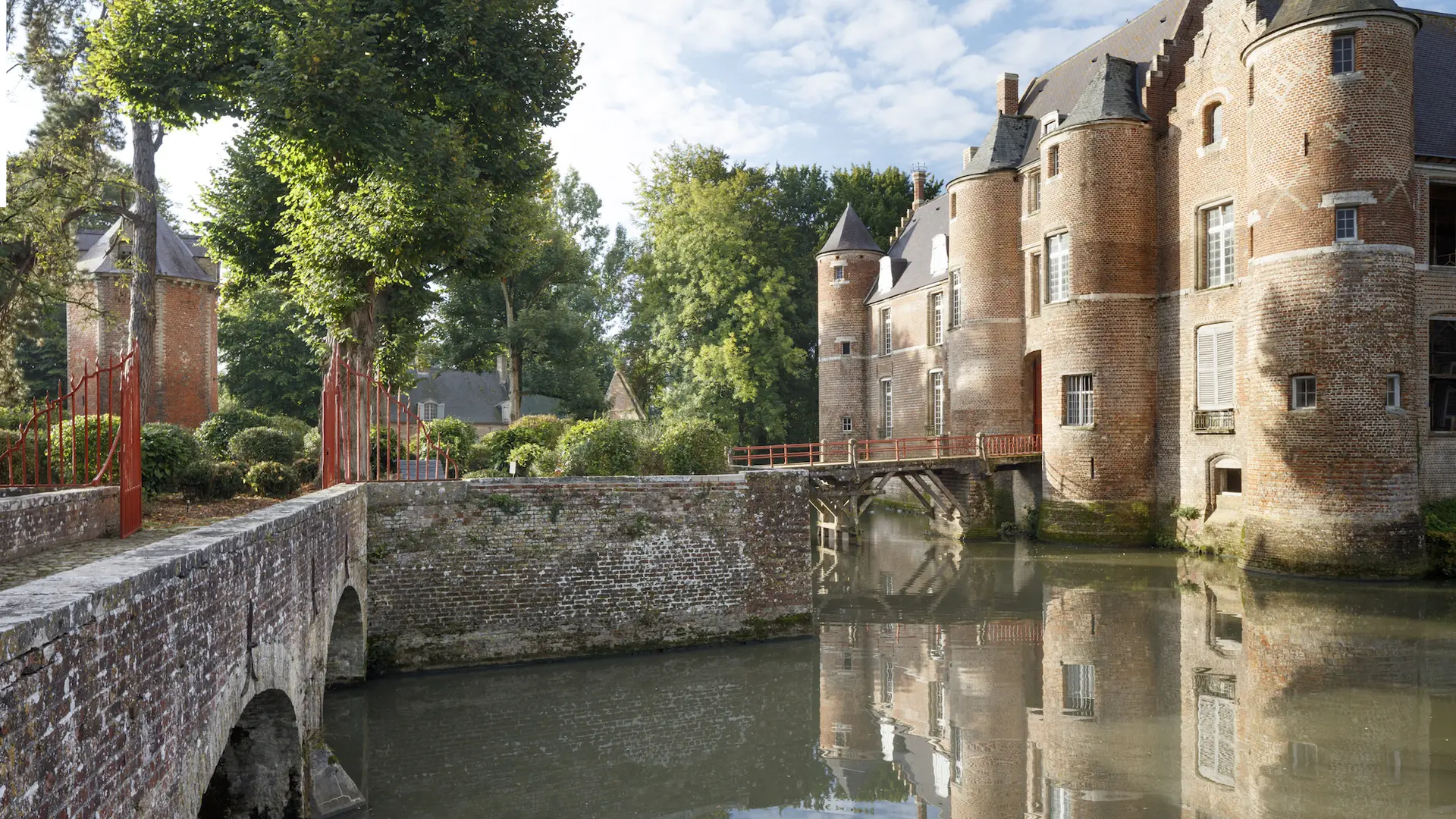
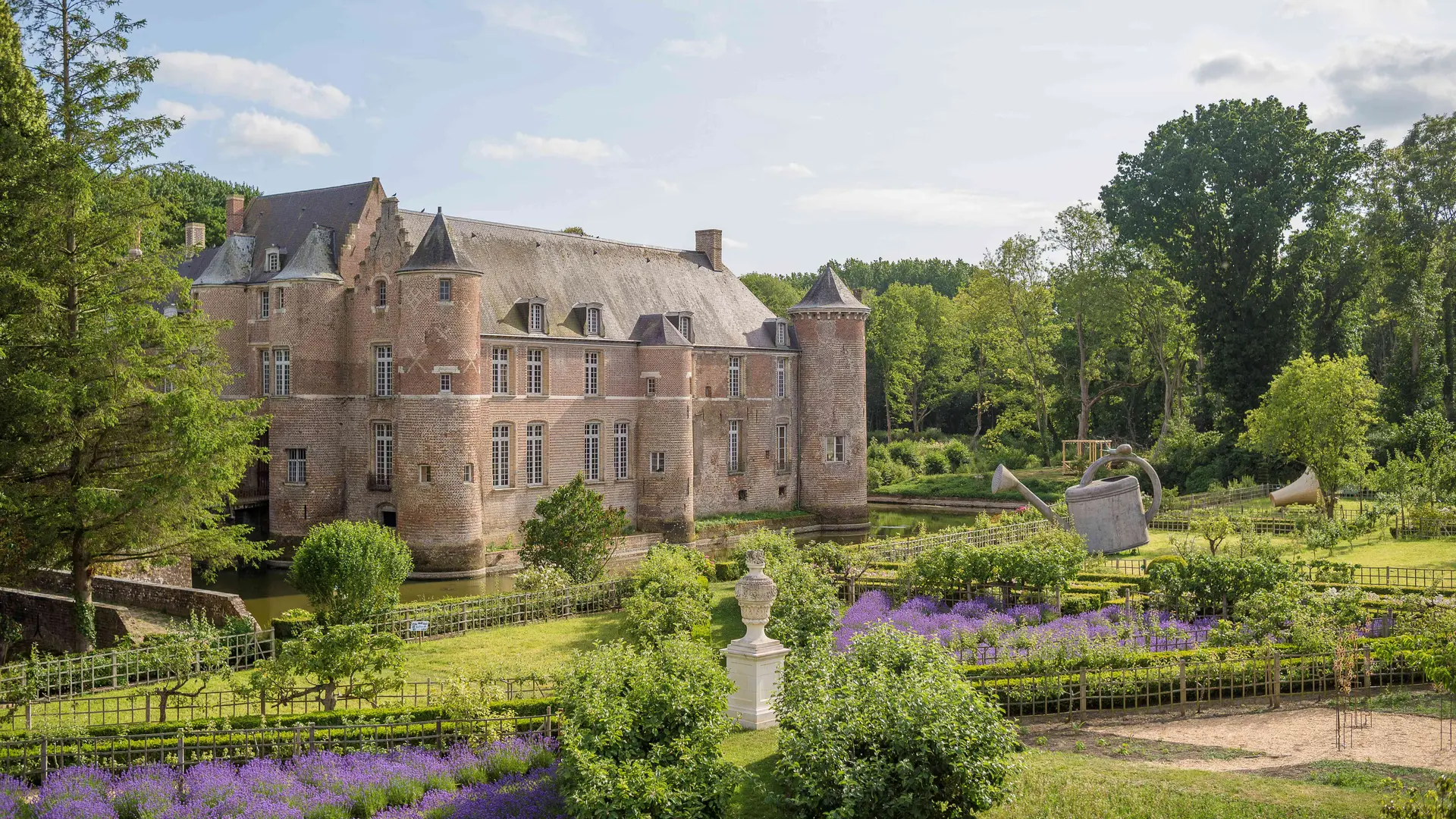
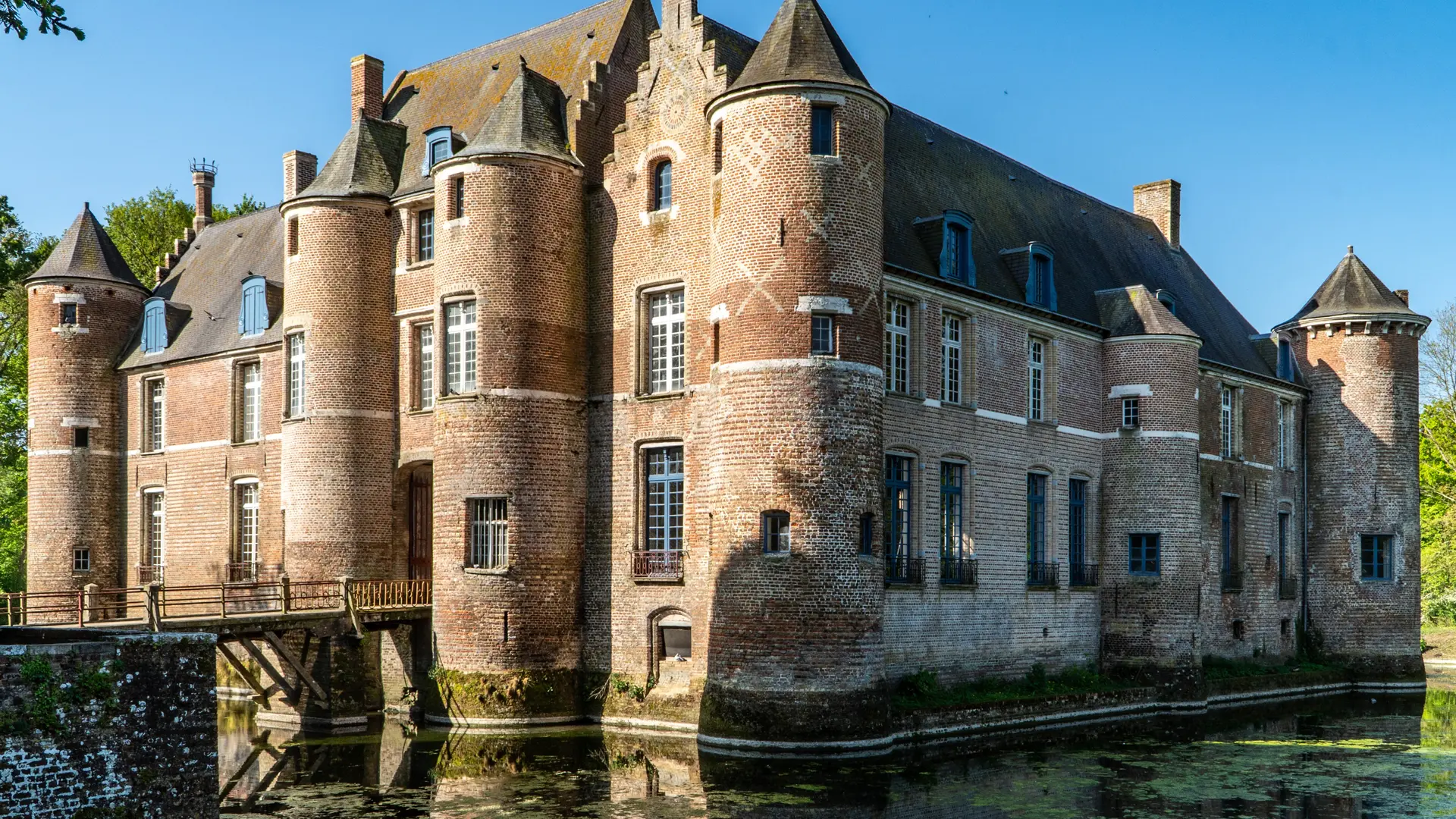
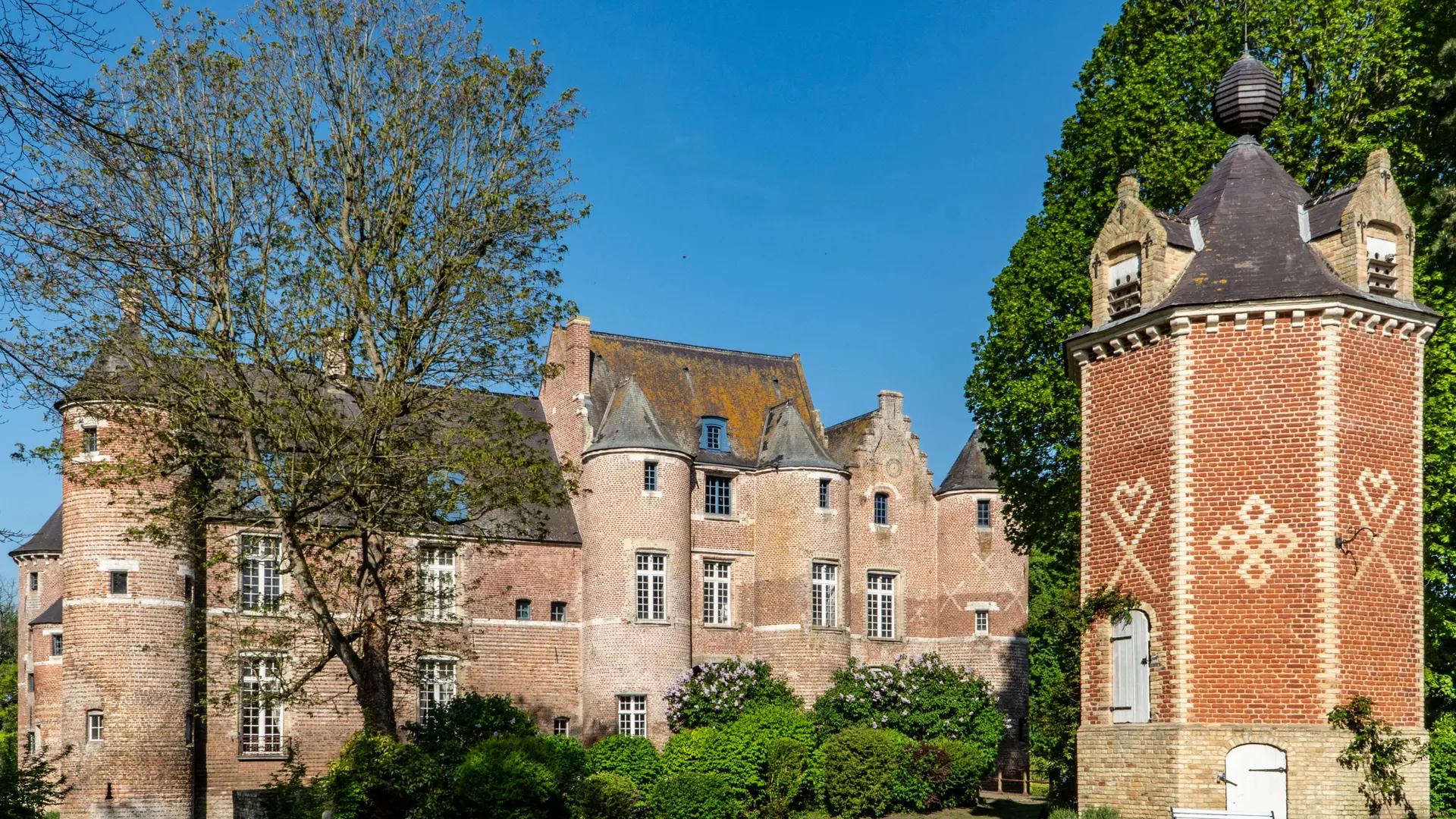
Château d'Esquelbecq is a large quadrilateral flanked by eight turrets. A border of white stone surrounds it at mid-height. Two bridges provide access to the building, which is surrounded by a moat.
The last general restoration of the château dates back to 1606, the date that could be read on the keep before it collapsed. This restoration saw the addition of numerous windows in the walls, some of which are more than 1 metre thick in places at their base. On July 24, 1944, the château and its outbuildings were added to the Supplementary Inventory of Historic Monuments.
Château d'Esquelbecq is one of the most representative examples of Flemish architecture in France. Surrounded by a moat, this Renaissance jewel was built in the late 16th century, with its 8 sparrow-stepped towers and gables.
Its appearance has changed little since the Sandérus engraving (1644); the compartmented garden created in the 17th century is a unique example of Flemish garden design. Passing the landscaped entrance courtyard around the bulbous Dovecote (1606), you'll find 1 km of boxwood, more than a hundred trellised fruit trees, some of which are over a hundred years old, a permaculture vegetable garden and a vine greenhouse (1860).
Since 2015, Alice's watering can, a monumental work by French sculptor Philippe THILL (1937-2010), has been installed in the garden. The Château Association organizes exhibitions throughout the season.
The gardens of Château d'Esquelbecq are open to groups by prior arrangement, and to private visitors during the summer months. The château can be visited at weekends, or by reservation for groups (minimum 10 people). From its gates, you can see the dovecote, wooded grounds and conciergerie (1590).